
Why Is My Fish Tank Cloudy: How to Fix It in 24 Hours
You filled up your brand new aquarium yesterday. This morning you wake up, and the water looks like someone poured milk into it. Or maybe your tank’s been running fine for months, and suddenly you can barely see your fish through the murky water.
Either way, you’re asking yourself: why is my fish tank cloudy, and what did I do wrong?
Here’s the good news. Cloudy water is one of the most common aquarium problems, and it’s usually pretty easy to fix. Even better? You can clear up most cases of cloudy water within 24 hours once you know what’s causing it.
Let’s figure out exactly what’s happening in your tank and get that water crystal clear again.
The Different Types of Cloudy Water
Not all cloudy water looks the same, and that’s actually helpful. The color and texture of your cloudy water tells you what’s causing the problem.
· White or Gray Cloudiness
This looks like someone stirred up a bunch of dust in your tank. The water has a milky, grayish appearance. You can still see through it somewhat, but everything looks hazy.
White cloudiness usually comes from one of two things: bacterial bloom or disturbed substrate. We’ll talk about both in detail in a minute.
· Green Cloudiness
When your water turns green, you’ve got an algae problem. The water might be bright green or just have a greenish tint. Either way, you’re dealing with millions of microscopic algae cells floating around in there.
Green water is different from green algae growing on your glass or decorations. This is free-floating algae suspended in the water column.
· Brown or Yellow Cloudiness
Brown or yellowish cloudy water usually means you’ve got tannins leaching from driftwood or other decorations. Sometimes overfeeding can cause a brownish tint too, especially if uneaten food is breaking down in the tank.
· Crystal Clear But Foamy
Sometimes your water looks clear, but the surface is covered in bubbles or foam. This isn’t exactly cloudy water, but it’s related. Foam usually indicates protein buildup from overfeeding or poor filtration.
Why Is My Fish Tank Cloudy? The Main Causes
Let’s break down the most common reasons fish tanks get cloudy. Once you identify your specific problem, fixing it becomes straightforward.
· Bacterial Bloom (New Tank Syndrome)
This is the number one reason new aquariums turn cloudy. You set up your tank, add water, maybe add fish too quickly, and boom—within 24-48 hours, the water looks like milk.
What’s happening? Your tank is establishing its nitrogen cycle. Beneficial bacteria are multiplying like crazy to handle the ammonia and nitrites in your water. This explosion of bacteria turns the water cloudy.
According to research from the University of Florida’s Department of Fisheries and Aquatic Sciences, bacterial blooms are a natural part of establishing biological filtration in new aquariums and typically resolve on their own within a few days.
The weird thing about bacterial blooms is they’re actually a sign your tank is doing something right. Those bacteria are essential for a healthy aquarium. The cloudiness is just a temporary side effect of them multiplying.
· Disturbed Substrate
Did you just add new gravel? Rearrange decorations? Add water too quickly? Any of these can kick up fine particles that make your water look cloudy.
This type of cloudiness is purely mechanical. There’s nothing wrong with your water chemistry—you’ve just got dust and debris floating around.
· Overfeeding
When you feed your fish too much, the excess food sinks to the bottom and starts breaking down. This releases organic compounds into the water and feeds bacteria, which can cause cloudiness.
Overfeeding doesn’t just make your water cloudy. It also spikes ammonia levels, stresses your fish, and encourages algae growth. It’s one of the biggest mistakes new fish keepers make.
· Poor Filtration
If your filter is too small for your tank, clogged, or not working properly, waste builds up in the water. This creates cloudiness and, more importantly, dangerous water conditions for your fish.
Think of your filter like the air conditioning in your house. If it’s not powerful enough or the filter is clogged, the system can’t keep up with demand.
·Algae Bloom
Green cloudy water happens when algae spores multiply out of control. This usually happens because of too much light, too many nutrients in the water, or both.
Direct sunlight hitting your tank is a major culprit. So is leaving your aquarium light on for 12+ hours a day.
· Medications or Additives
Some fish medications and water treatments can temporarily cloud your water. This is usually harmless and clears up on its own once the medication disperses.
If you just added something to your tank and the water turned cloudy, check the product label. It might mention temporary cloudiness as a normal side effect.
How to Fix Cloudy Fish Tank Water in 24 Hours
Now for the practical stuff. Here’s how to clear up your cloudy water fast, depending on what’s causing it.
For Bacterial Bloom (White/Gray Cloudiness)
Here’s what might surprise you: the best treatment for bacterial bloom is to do nothing. Seriously.
Resist the urge to do a massive water change or add chemicals. The bacteria causing the cloudiness are beneficial. They’re doing exactly what they need to do to establish your tank’s biological filter.
Instead:
- Keep the filter running continuously
- Don’t add any more fish until the water clears
- Skip a feeding or two to reduce the bacterial food source
- Test your water daily for ammonia and nitrites
- Be patient—the bloom usually clears within 2-4 days
If you absolutely must speed things up, here’s what you can do:
- Add beneficial bacteria supplements (like Seachem Stability or API Quick Start)
- Do a 25% water change to dilute the bacteria slightly
- Make sure your filter media is clean and water flow is strong
At The Fish Tank Guru, we’ve seen hundreds of cases of bacterial bloom, and patience really is the best medicine. The tanks that clear up fastest are the ones where owners resist the temptation to “fix” things.
For Disturbed Substrate (Dust Cloudiness)
This one’s easy to fix quickly. The particles will settle on their own within a few hours, but you can speed it up:
Let the filter run. Your filter will catch a lot of the suspended particles. Check it after a few hours and rinse the media if it’s getting clogged.
Add a water clarifier product. These products bind tiny particles together so they’re large enough for your filter to catch. API Accu-Clear or Seachem Clarity work well for this.
Don’t do a water change yet. You’ll just stir things up more. Wait until the particles settle, then vacuum them up the next day.
This type of cloudiness usually clears within 12-24 hours with minimal intervention.
For Overfeeding Cloudiness
Stop feeding your fish immediately. They’ll be fine without food for a day or two. In fact, most fish can go a week without food if necessary.
Do a 25-30% water change to remove dissolved organic waste. Use your gravel vacuum to suck up any visible food on the substrate.
Clean or replace your filter media. Excess food often clogs filters and reduces their effectiveness.
Going forward:
- Feed only what your fish can eat in 2-3 minutes
- Feed once a day instead of twice
- Consider using a feeding ring to contain the food
Your water should clear within 24 hours once you stop adding food to the system.
For Poor Filtration Issues
Check your filter right away. Is water flowing through it properly? Is the media clogged?
Clean your filter media in old tank water (never tap water, which kills beneficial bacteria). Remove any visible debris blocking the intake or output.
If your filter is working but your water is still cloudy, your filter might be too small for your tank size. The general rule is your filter should turn over the entire tank volume 4-6 times per hour. A 20-gallon tank needs a filter rated for at least 80 gallons per hour.
Consider adding a second filter if your current one isn’t cutting it. Two smaller filters often work better than one large filter anyway because they provide backup if one fails.
For Algae Bloom (Green Water)
Green water is trickier to fix in 24 hours, but you can make major progress:
Do a 50% water change right away. This removes a huge portion of the floating algae. Yes, this is a bigger water change than normal, but algae blooms call for more aggressive action.
Turn off your aquarium light completely for 3-5 days. Algae needs light to survive. Cutting off the light source starves the algae. Your fish will be fine in ambient room light.
Add fast-growing plants if you don’t have them already. Plants compete with algae for nutrients. More plants usually means less algae.
Consider a UV sterilizer. These devices kill algae as water passes through them. They’re expensive but incredibly effective for persistent green water problems.
According to experts, UV sterilizers can clear green water in as little as 24-48 hours by destroying algae cells as they pass through the unit.
Reduce feeding. Less food means fewer nutrients for algae to feed on.
Keep your tank away from windows. Direct sunlight makes algae problems way worse.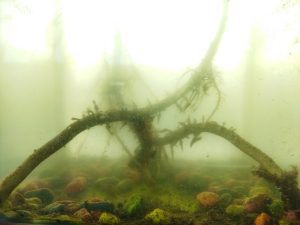
For Tannin Cloudiness (Brown/Yellow)
Tannins aren’t harmful to fish—in fact, many fish prefer water with tannins. But if you don’t like the look, here’s how to fix it:
Do water changes. This is the simplest solution. Replace 25-30% of the water daily until the brown tint fades.
Use activated carbon in your filter. Carbon absorbs tannins and will clear the water within 24-48 hours.
Soak new driftwood before adding it to your tank. If you just added driftwood, that’s likely your culprit. Remove it, soak it in a bucket of water for a week, changing the water daily, then return it to your tank.
What NOT to Do When Your Fish Tank Is Cloudy
Some “solutions” actually make cloudy water worse. Avoid these common mistakes:
· Don’t Do Massive Daily Water Changes
Constantly removing and replacing large amounts of water prevents your tank from establishing stable conditions. You’re basically hitting the reset button over and over.
Stick to one water change of 25-30% (or 50% for algae blooms) and then let the tank stabilize.
· Don’t Add Multiple Chemicals at Once
Water clarifiers, algae treatments, pH adjusters—adding a bunch of products at once can create chemical interactions you don’t want. Treat one problem at a time and give each treatment time to work.
·Don’t Remove All Your Filter Media
Some people panic and throw away all their filter media, thinking it’s the problem. Bad idea. That media houses beneficial bacteria your tank needs. Clean it, don’t replace it (unless it’s literally falling apart).
·Don’t Keep Adding Fish
If your tank is cloudy, your water quality is unstable. Adding more fish increases ammonia production and makes everything worse. Wait until the water clears and stabilizes before adding new fish.
·Don’t Turn Off Your Filter
Keep that filter running 24/7. Your fish need the water circulation and filtration, even when the water is cloudy.
Preventing Cloudy Water From Coming Back
Once you’ve cleared up your cloudy water, let’s make sure it stays that way.
Establish a Regular Maintenance Routine
At The Fish Tank Guru, we can’t stress this enough: consistency prevents problems. Clean your tank weekly. Change 25-30% of the water. Vacuum the gravel. Clean the filter monthly.
Regular maintenance keeps waste from building up and prevents most causes of cloudy water.
Don’t Overstock Your Tank
Follow the one-inch-of-fish-per-gallon rule as a starting point. More fish means more waste, which means more potential for cloudy water. It also means more stress on your filtration system.
Feed Appropriately
Your fish only need a small pinch of food once or twice a day. If food is still floating around five minutes after feeding, you’re feeding too much.
Monitor Your Water Parameters
Test your water weekly for ammonia, nitrites, and nitrates. Catching problems early prevents them from becoming serious. Keep a log of your test results so you can spot trends.
The API Freshwater Master Test Kit is the gold standard for home aquarium testing. Liquid test kits are way more accurate than test strips.
Control Your Lighting
Keep your aquarium light on for 8-10 hours a day maximum. Use a timer to keep it consistent. If your tank is near a window, move it or block the direct sunlight.
Use Quality Equipment
A good filter appropriate for your tank size prevents most water quality problems. Cheap filters might save you money upfront, but they’ll cost you more in the long run through poor performance and frequent replacements.
When to Worry About Cloudy Water
Most cloudy water is annoying but not dangerous. However, there are some situations where cloudy water signals a serious problem:
If your fish are gasping at the surface, get an air pump running immediately. Bacterial blooms can consume oxygen and suffocate your fish.
If you detect ammonia or nitrites in an established tank (one that’s been running for more than a month), you’ve got a serious problem. Do daily 25% water changes until levels drop to zero.
If your fish are dying and the water is cloudy, something’s very wrong. Test your water immediately. Check the temperature. Look for signs of disease. You might need to move your fish to a hospital tank while you fix the main tank.
\If the cloudiness doesn’t improve after a week despite your efforts, you might have multiple problems happening at once. Consider consulting with an aquarium specialist or posting photos and water test results on aquarium forums for additional help.
The Real Answer to “Why Is My Fish Tank Cloudy?”
Most of the time, cloudy water comes down to one of these issues: your tank is too new and going through bacterial bloom, you disturbed the substrate, you’re overfeeding, or you’ve got an algae problem.
The fix is usually simpler than you think. Don’t panic. Don’t dump chemicals into your tank. Don’t do massive water changes every day. Instead, identify the specific cause, apply the appropriate solution, and give it time to work.
Remember, your tank is a living ecosystem. It takes time to establish balance. New tanks almost always go through a cloudy phase. Established tanks can develop cloudiness if something disrupts their balance.
The key is understanding what’s happening and responding appropriately. With the information in this guide, you can diagnose cloudy water quickly and clear it up within 24 hours in most cases.
Your fish deserve clean, clear water. You deserve to enjoy looking at your aquarium without squinting through murky cloudiness. Now you know how to make that happen.